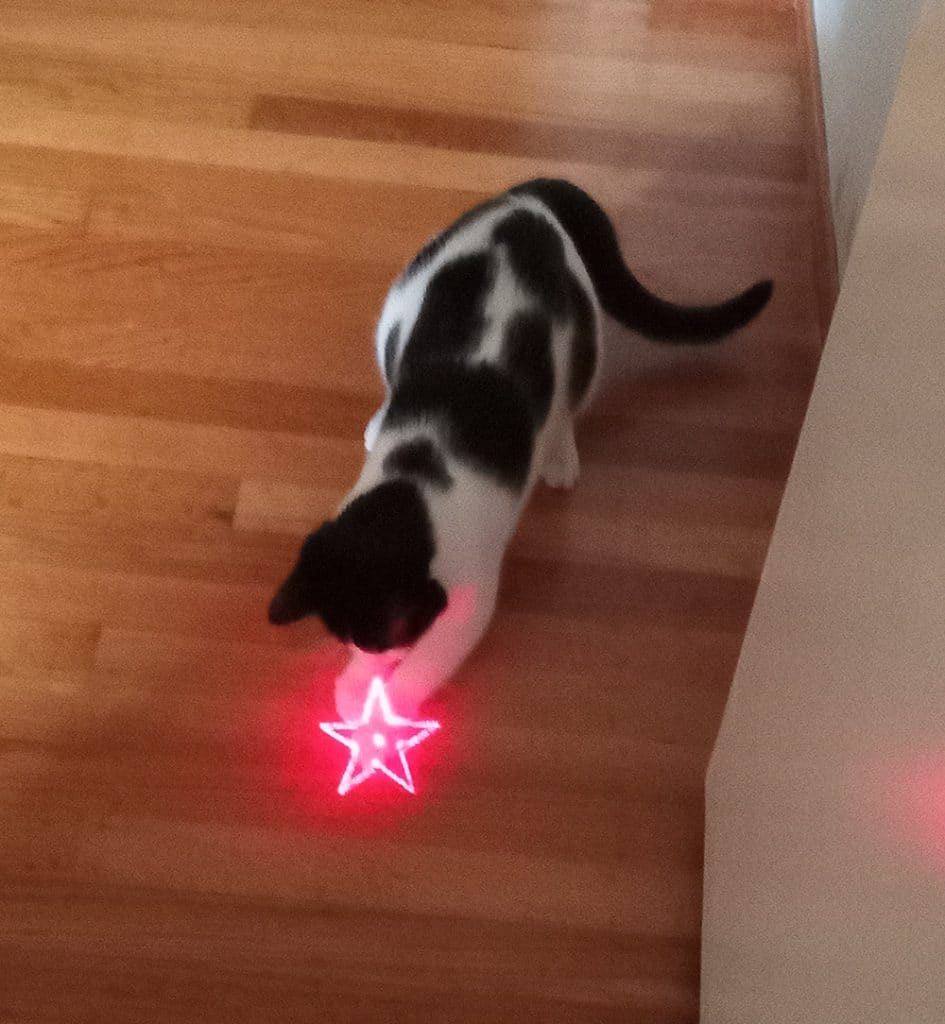
Some cats really respond fast to a laser pointer and rush around chasing the little dot or shape. I have a pointer that has several settings, butterfly, dot, bug shape, star, mouse, and smiley face. I notice that some cats do not seem to see the laser light at all. And of course, it works better in a darker room so they can see the contrast better.
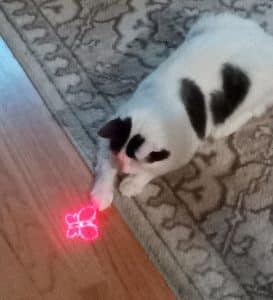
I frequently pet sit for two brothers who are cat-brothers from the same litter. Woodstock is very outgoing, almost like a dog. He always greets you at the door and follows you around the house jumping onto counters nearby or into your lap or sitting on you if you lie down. But he cannot seem to notice the laser pointer or even detect the movement of the light.
Ramses is the more reserved brother. But he really shines when it comes to playing with wands and laser pointers. He is a natural hunter and very quick and he responds quickly to chase the laser pointer and doesn’t get bored with it for a long time.
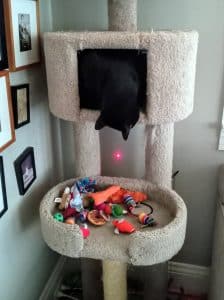
Ramses also loves food but is picky about which food it is, while his brother is not very food motivated. Woodstock te more soiable brother, likes any old thing and will eat until full and then walk away. Ramses has a weight problem because he loves kibble and will eat his own portion and his brother’s portion.
Ramses, the introvert, often hides out and likes to be alone in dark corners. He is very sweet and approachable once you get to know him. and he suddenly bcmoes a sleek panther when he sees the laser pointer.
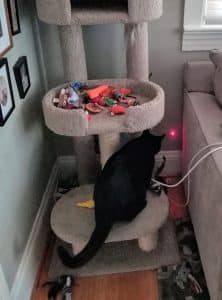
Another three cats I pet sit living in one house together, but from different litters react exactly the opposite way to the laser pointer. Shy retiring cats do not seem able to detect the laser in this household.
The most social cats who like hanging around humans are the most responsive to the laser in this cat family. One cat, Pluto, is very responsive to the laser is likeWoodstock from the two-cat-brothers-family I mentioned before, Pluto is very sociable, greets you at the door like a dog and follows you around the house nonstop.
He loves the laser and cannot get enough of it. Sometimes he will stop chasing it and ignore it because he gets frustrated with not finding anything real when he catches the little light.
But soon he will start looking around and lashing his tail ready for more laser-chase. His sister cat is a bit less social. She will come out and look around and will respond to the laser some of the time.
The third cat is very retiring and hides under the couch when strangers come. It wasn’t until I had been coming to pet sit for 5 days that I actually saw her in person. And she does not respond to the laser at all.
Perhaps the cats who don’t chase the laser are smarter and simply know it is only a light and not a real insect to chase so they don’t bother to chase it.
But some cats just don’t seem to perceive the laser light. The way some animals don’t seem to notice the TV or an image in the mirror. Are they more intelligent or less intelligent than their fellow laser chasing counterparts? Probably just a different type of intelligence. Perhaps more wild and less domesticated?
Ways to make laser chase fun, safe, and rewarding
To make the laser play more enjoyable for cats one expert suggests giving treats periodically during laser play so they have something tangible and don’t get frustrated.
Of course, never point the laser directly into your cat’s eyes. If they are overweight or out of shape, start slowly with smaller movements. Though some cats love a fast intricate laser chase. Be sure to also play with other toys that are real and three dimensional to cats don’t become frustrated with the endless laser chase and develop laser toy syndrome, frustration or aggressive behavior.
Research
https://www.petmd.com/news/view/why-are-cats-obsessed-laser-pointers-35474
https://www.thesprucepets.com/reasons-why-cats-chase-lasers-4690886